|
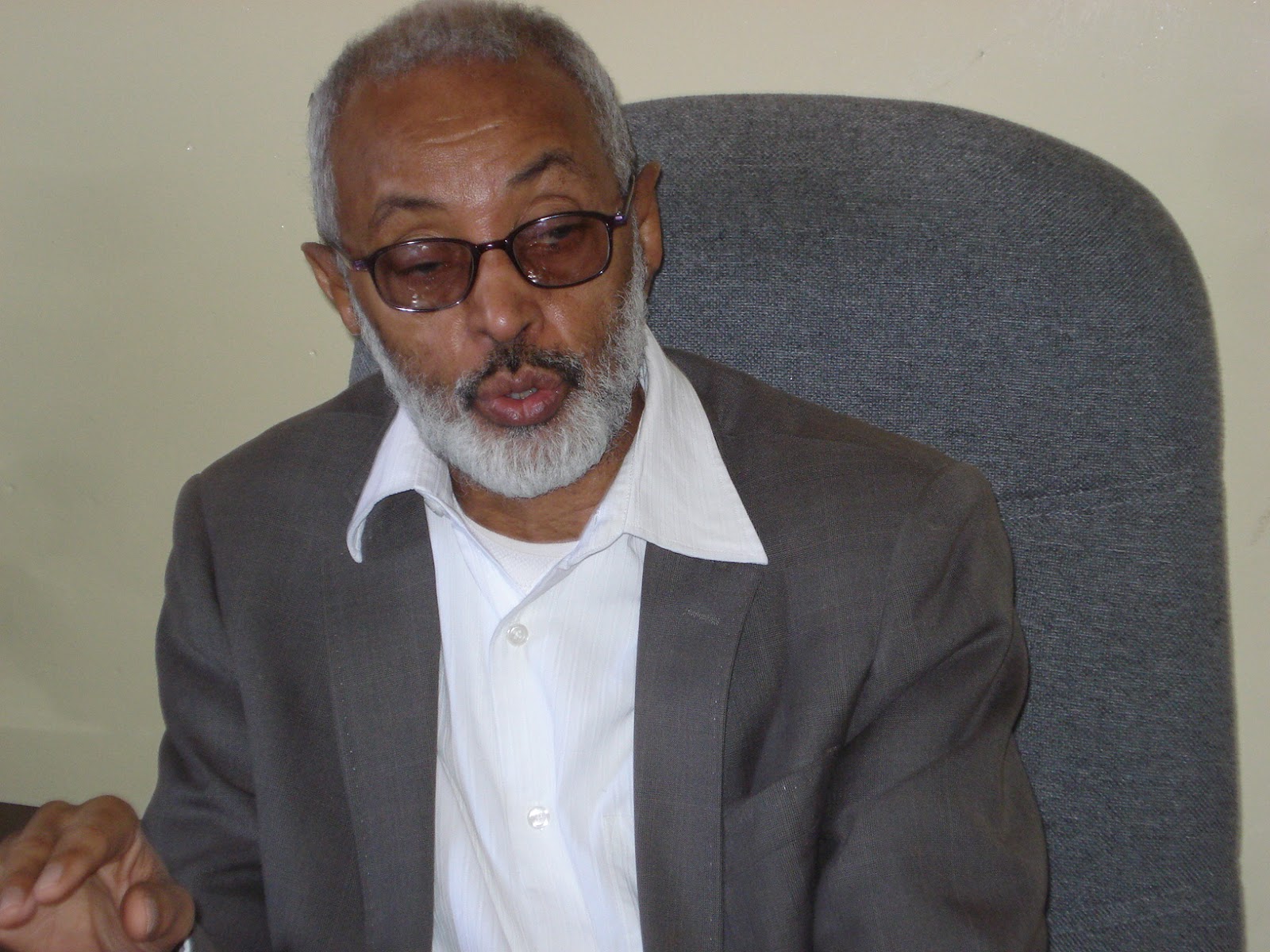
| Yusuf Deyr. |
You find too that what you see depends partly on what you want
to look at, and partly on how. As I said, the third eye is only an
eye. But there are some people who resent that third
eye. They would have it removed, if they could. They
feel it as a parasite, sitting illegally or occupying in the centre of the
forehead, feeding the brain with pessimistic and ugly scenes.
To those who hate the third eye, it shows them only the worst scenario of
every scene. That stinking bad smell of the dead bodies of mass –
murder, and the massacre of innocent people,
Burned corpses at the cave
mouth of the masses – graves. Those disappointed, scared children
and helpless mothers that are shivering due to cold and fear. Those
hearts of those bullies politicians that are swollen and inflamed with jealousy
and greed, flashing through the vests and sweaters which they are
wearing. Abusing their masses after they were granted their
mandate. The tracks or spoors of those military Generals and their
soldiers who are willing to kill. That torment or severe mental
and physical suffering of those maimed and crippled poor
civilians. Dear reader, civil War leaves a country with three
armies. An army of cripples and mutilators, an army of mourners and
an army of thieves.
Dear
reader, thinking is something that no one has ever been able to tax. The
darkness has ink eyes, and if you stare long enough, you are going to see
it blink black. That is the moment you start writing
about your ill feelings and pinpointing where the shoe pinches.
At the
dawn of his administration president Obama of the United States
said. A democracy requires accountability, and accountability
requires transparency. That magical rays of white hot sunlight
originated from it’s media manufactured halo ( or that circle of light shown ),
surrounding the head of the state. And then bureaucratically
engineered darkness settled over the land or Country. Thomas
Jefferson the third president of USA who served his country for five decades
said "I would rather have a free press without a Government than
a Government without free press". Perfection is not
attainable, but if we chase perfection, we can catch excellence.
The best preparation for tomorrow is doing your best today.
If opportunity doesn’t knock, build a door. Lack of transparency
results in distrust and a deep sense of insecurity. A basic
doctrine or principle of a healthy democracy is open dialogue and
transparency. Success are Self – Definition, transparency,
authenticity and accountability. We need more accountability and
transparency in this country. There can be no faith in Government if
our highest offices are excused from scrutiny. They should be
setting the example of transparency. What passes for a
woman’s intuition is often nothing more important than her husband’s
transparency. Dear Somalilander, since the arrival of Mr.Silanyo,
we live in a culture of destructive transparency. As a president,
look at the evidence and be willing to question your own truths, and be willing
to scrutinize things that you hold dearly. Because that way,
that transparency, that self – awareness will protect you from ever becoming
somebody that whose beliefs somehow make them have myopic vision about what
could be ( lack of intellectual insights ). You have got to
be truthful with yourself and with the public. You have got to
share your soul and conscience with people and show them who you are, and not
to be afraid of it. You have to be smart enough to read the hearts
and minds of your people. In Somaliland there is relative peace,
relative stability, relative continuity and relative security.
And
these are the necessary ingredients to fast track of development and
growth. But we missing accountability and transparency which are the arch
chiefs of democracy. Simply because our leadership has a severely
wounded third eye. They can see only with two eyes. Mr.
Silanyo, a man with a beatiful wife must have more than two eyes.
Leadership is to translate vision into a reality. Mr. Silanyo, the
currency of leadership is transparency. Chase the vision not
the money, then the money will end up following you. Try to be a rainbow
in someone’s cloud.
Dear
Somalilander, Mr. Silanyo says: double thinking means the power of holding two
contradicting beliefs in mind simultaneously and accepting both of
them. Tribalism and nepotism; with integrity, dictatorship with
democracy, sovereignty with federalism. Mr. Winston Churchill said, the
nation will find very hard to look up to the leaders who are keeping their ears
to the ground. Mr. Silanyo, we are more smarter than you expect us.
Don’t underestimate the public and stop reciting and singing those lullaby
soothing songs of grandma that sends children to sleep. Stop your double
standard policy of hiring those ignorant sultans with mercenary – motives
to negotiate with Evil – Empire in Mogadishu; and at the same time
beating the false drums of Sovereignty and holding a baby – shower for an
Independent free State. Trying to convince us how hard you are struggling
for the recognition of Somaliland. Because we have been acknowledged by
Tower Hamlets which is a Sub – District of east London. At the same time
courting with his most beloved bride in Mogadishu. Mr. Silanyo, get
your facts first, then you can distort them as you please. That is very
disgusting and an insult to our intelligence as Somalilanders.
Dwight D. Eisenhower said, when something bad happens to you.
You have three choices. You can either let it define you, let it
destroy you, or you can let it strengthen you. Neither a wise
man, nor a brave man lies down on the tracks of history to wait for the train
of the future to run over him. Mr. Silanyo, please don’t sign your death
contract. Mr. Silanyo, what light is to the eye, what air is to the
lungs, what love is to the heart, and what liberty is to the soul of a free
man? Too much agreement kills the chat. It is
very easy to defeat a man but it is very hard to win someone.
Mr.
Silanyo, if you are still impressed with the Rum from Johar and the
spegati of Mogadishu where nobody knows your name.
Goodbye with a ring and a kiss. But me, I am longing for the Qas
Qasa Beer and the dish of Tipsy and Anjera of Addis, served under the courtesy
of that unique Ethiopian hospitality. That suits my palate and sense of
taste. Bear in mind that a successful man is one who makes more
money than his wife can spend. A successful woman is one who can
find such a man. Dear Somalilander, never cry for that person who
doesn’t know the value of your tears. Lots of people want to ride
with you in the limo. But what you want is someone who will
take the bus with you when the limo breaks down. There is always
one person in relationship who loves more, cares more, cries more and even
forgives more. That is Somalilanders relatively to their
leaders. When fate strikes against you. You have three
choice. You can either let it define you, you let it destroy you,
or you can let it strengthen you. Mr. Silanyo believes that
wrinkles on his face are hereditary that leaders got them
from their masses. Dear Somalilander, when you are courting a nice
beautiful girl friend, an hour seems like a second, but when you chatting with
an ugly face, a second seems like an hour. Since the arrival of Mr.
Silanyo, the night is long that never finds the day. Mr.
Silanyo, I may be drunk, but in the morning I will be sober and you will still
be ugly. Wine is constant proof tha God loves us, and loves to see us
happy. If you drink you will die; if you don’t drink still you will
die; so die while you are happy. That is the legacy and Will –
remarks of our leader. Dear Somalilander, If you haven’t got
anything nice to say about anybody, come and sit next to
Mr.Silanyo. Remember! A woman’s mind is cleaner than a
man’s. Because she changes it more often. Mr.Silanyo,
tomorrow doesn’t exist, but our dreams do.
Mr. Musa
Bihi, as a Mujahid who sacrificed with bone and blood to free
us from the shackles of slavery and humiliation; you owe me a great respect and
gratitude. That is why I am giving you my sincere advice; though we are
not sailing on the same boat. Mr.Bihi, we all leave footprints as
we journey through life. A person who walks in another’s tracks
leaves no footprints. If you walk in the footprints of Mr.Silanyo;
you won’t make any of your own. Many people will walk in and out of
your life.
But only
true friends will leave footprints in your heart. If you want
to leave your footprints on the sands of time, don’t drag your
feet. Because Mr.Silanyo have had too many muddy footprints
trampled across his soul. Don’t be arrogant with a slip of tongue, or
act as a loose cannon as before. Keep your eyes on the stars, and
your feet on the ground. A leader always needs
people to charge his life; or you charge their life. Follow
your bliss and the universe will open doors where there are walls.
Never ignore a person who loves you and cares for you. Because one day,
you might wake up and realize that you lost the moon while counting the
stars. Love is when the other person’s happiness is more important
than your own. Your attitude is based on how you treat those
who are badly in need of you. But don’t let people to tell you, who
you are, you tell them. Always be humble and
kind. Forget not that the earth delights to feel your bare feet and
the winds long to play with your hair. My last option is to
reconcile with your old Camp, the Madasha Wada Tashiga. I wish you
Allah mercy and blessings/
Dear
reader, my intimate friends scold me for not writing my articles in the Somali
language; but they don’t know that I am searching since 1991 a prescription to
erase that language from my brain. Because I don’t want to share
anything with those wild beasts from Mogadishu who steals the gold teeth from
the dead bodies. I can bet with my last penny.
Yusuf
Deyr,
Canada/
Edmonton
Source; Somaliland Monitor.